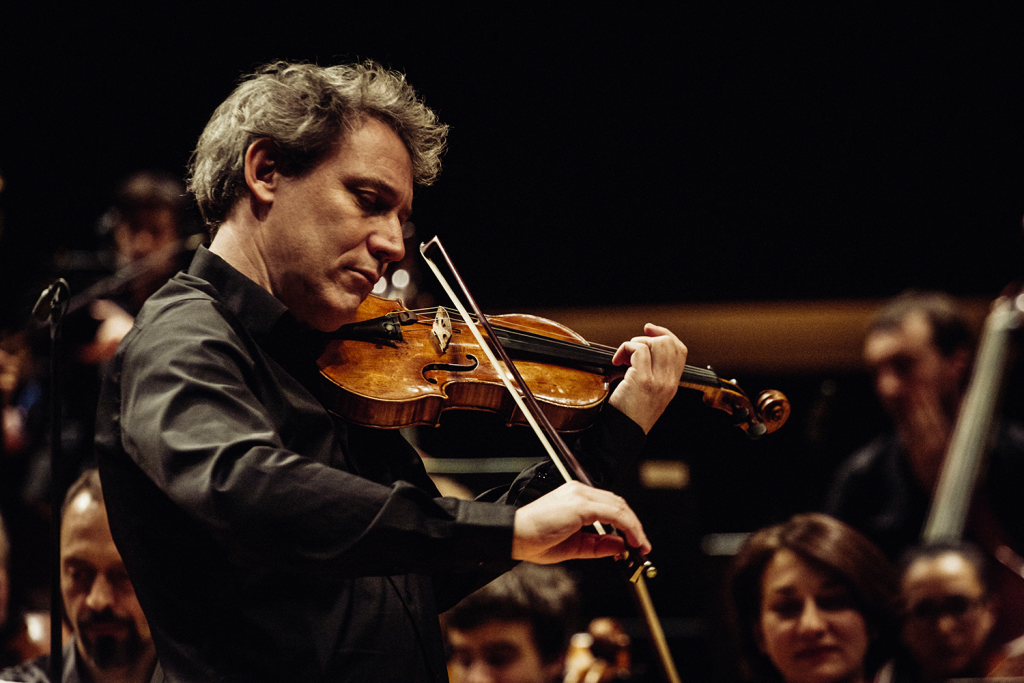
— Artistic direction — David Grimal
Les Dissonances
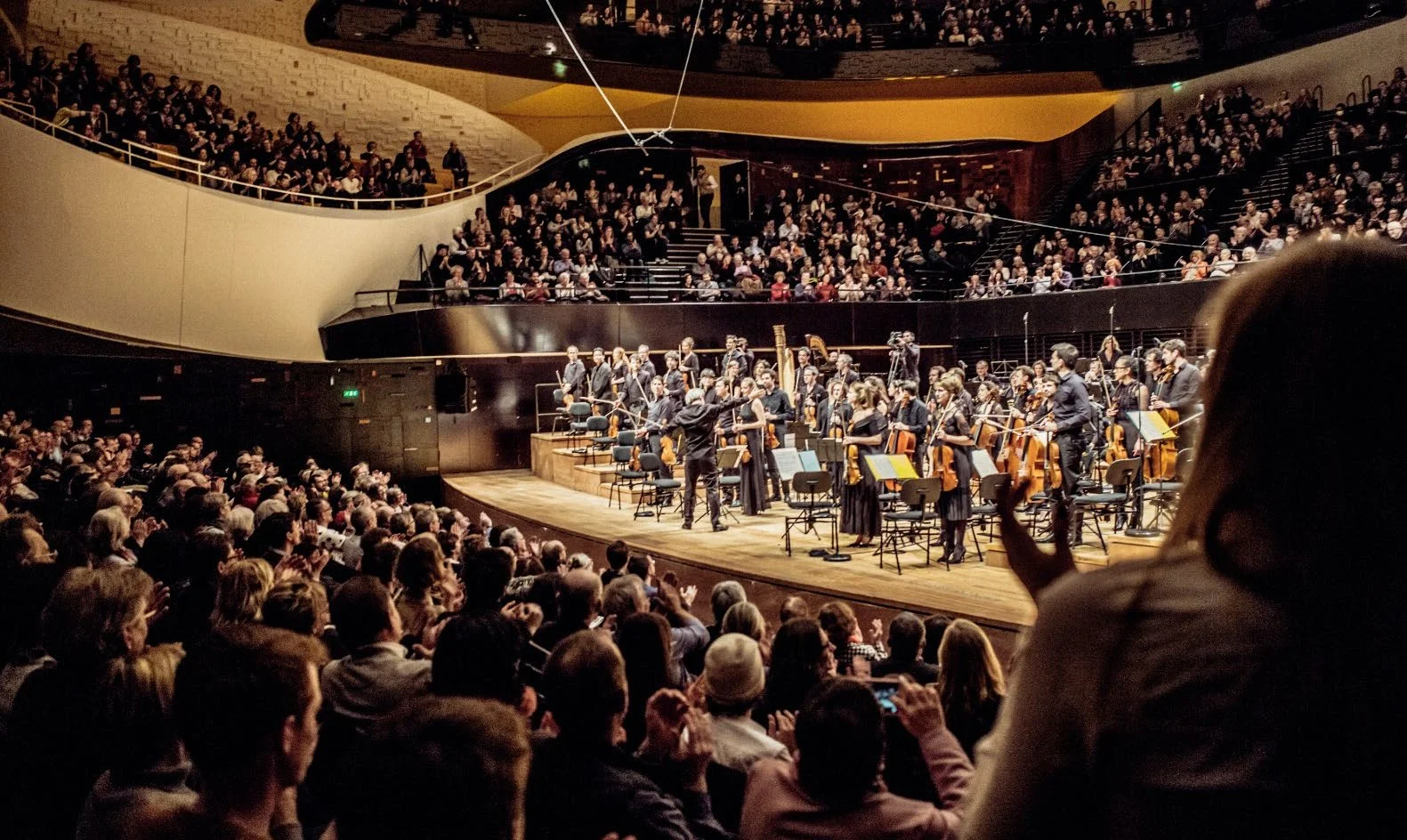
— Les Dissonances
Created in 2004 by David Grimal, Les Dissonances spent twenty years developing another way of playing together and of approaching the interpretation of the symphonic repertoire — a model unique in the world. The orchestra bid farewell to the stage in 2024.
It brought together soloists from the finest French and international ensembles, renowned chamber musicians and young talents at the start of their careers, chosen by co-optation for their musical and human qualities. The musicians shared the desire for a collaboration founded on the pursuit of excellence, and music was made collegially under the artistic direction of violinist-conductor David Grimal. Without a baton, he worked in harmony with the orchestra. Listening and sharing knowledge were at the heart of the human and artistic relationship that flourished in this singular setting, where high standards and kindness were the values that united everyone.
This collective of artists thus offered a new vision of the great symphonic works for large forces (more than 90 musicians), and also presented chamber music concerts during its seasons.
Over the seasons, Les Dissonances performed Debussy's La Mer, symphonies by Shostakovich, Bruckner and Mahler, Ravel's Daphnis et Chloé Suite No. 2, Bartók's Concerto for Orchestra and Stravinsky's ballets, triumphing in Europe's great concert halls. Their performance of The Rite of Spring in the Grande salle Pierre Boulez of the Philharmonie de Paris came as a real shock to the whole musical world.
Building on this creative approach, the orchestra became established in prestigious institutions such as the Philharmonie de Paris and Le Volcan, Scène Nationale du Havre. It performed regularly throughout Europe (Victoria Hall in Geneva, the George Enescu Festival in Bucharest, Besançon, the Koningin Elisabethzaal in Antwerp, the Opéra de Dijon, the Teatro Comunale di Ferrara, the Auditorio Nacional in Madrid, the Musika-Música Festival in Bilbao, the Eilat Chamber Music Festival, the Palau de la Música in Valencia).
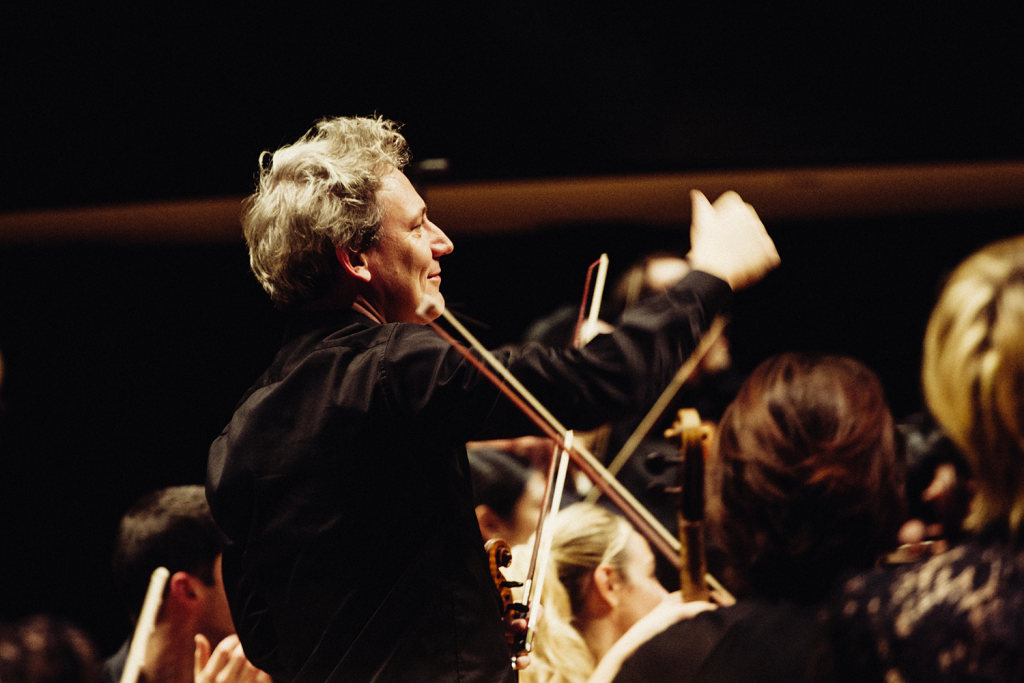
— Responsibility - Commitment - Boldness
An “Other Direction” in music
In rehearsals, I gave general indications, a framework, an energy, so as to focus everyone around a clear, defined, organised line. My role as mediator led each person to become aware of their own role in the group and of everything happening musically around them. When feelings diverged too much, I made the decisions. The difference from a conductor's work lay in the goal: in the end, there were only conductors.
At the concert, energies and sensibilities, instead of converging on a single person who unites them, were passed between the musicians, within each section and between groups of instruments. The work, although led from the first violin, was the fruit of a collaboration between everyone, the score being our only master. All this formed another world, in which pleasure was king, the standards higher and the risk-taking greater.
While the work was entirely geared towards the highest standards, the musicians of Les Dissonances addressed every audience. It was above all a civic project, in which music and the relationship with others were placed at the centre. Everyone's talents were called upon to the full and put at the service of music.
The values of sharing, solidarity and commitment were not merely displayed values; they were the very condition of the project's existence and of the level of excellence it pursued. They were values “in action”.
— Collective intelligence - Artistic excellence - Sharing
“In an orchestra that champions collective intelligence, a climate of trust had to be established to free the artistic gesture. That is where I saw my role: questioning the interpretation, creating the conditions for collective work and allowing everyone to contribute to the musical edifice. For me, a leader is not someone who erases individuality but someone who reveals the best in it.
At the concert, energies and sensibilities were passed between the musicians and unfolded within each section and group of instruments. The work, although led from the first violin, was the fruit of a collaboration between everyone; the ultimate aim, of course, being to serve the music with the highest standards.”
David Grimal
— Listening - Concentration - Commitment
The “Other orchestra” in the service of music
Aware of their full responsibility towards the score, each musician showed the utmost listening, concentration and commitment.
Les Dissonances thus kept raising the artistic level of the challenges they took on. By tackling ever more complex works for ever larger forces, the orchestra proved the artistic relevance of its collective approach, in which everyone was more than ever responsible for, and an actor in, the musical result. In concert, this was unanimously felt as a moment of sharing between the musicians and with the audience, imbued with an organic energy and a high level of artistic demand!
The orchestra celebrated its 20th anniversary in 2024 with a season highlighted by a new Philharmonie de Paris production, “Notre Sacre”, with Abd Al Malik and Blanca Li in April. The orchestra bid farewell to the stage with a final concert at the same Philharmonie de Paris on 7 October 2024, with a Berg-Bruckner programme.
“Allowing musicians to be a driving force multiplied all the creative energies, leading each of them to reflect on the deeper meaning of their practice and their art.”
David Grimal